Showing posts with label RNA. Show all posts

Thursday, June 23, 2016

Making error-free DNA from RNA


For 3 billion years, one of the major carriers of information needed for life, RNA, has had a glitch that creates errors when making copies of genetic information. Researchers at The University of Texas at Austin have developed a fix that allows RNA to accurately proofread for the first time. The new discovery, published June 23 in the journal Science, will increase precision in genetic research and could dramatically improve medicine based on a person's genetic makeup.

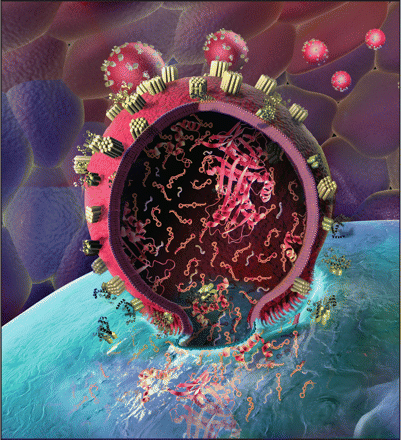
Certain viruses called retroviruses can cause RNA to make copies of DNA, a process called reverse transcription. This process is notoriously prone to errors because an evolutionary ancestor of all viruses never had the ability to accurately copy genetic material.

The new innovation engineered at UT Austin is an enzyme that performs reverse transcription but can also "proofread," or check its work while copying genetic code. The enzyme allows, for the first time, for large amounts of RNA information to be copied with near perfect accuracy.

"We created a new group of enzymes that can read the genetic information inside living cells with unprecedented accuracy," says Jared Ellefson, a postdoctoral fellow in UT Austin's Center for Systems and Synthetic Biology. "Overlooked by evolution, our enzyme can correct errors while copying RNA."

Reverse transcription is mainly associated with retroviruses such as HIV. In nature, these viruses' inability to copy DNA accurately may have helped create variety in species over time, contributing to the complexity of life as we know it.

Since discovering reverse transcription, scientists have used it to better understand genetic information related to inheritable diseases and other aspects of human health. Still, the error-prone nature of existing RNA sequencing is a problem for scientists.

"With proofreading, our new enzyme increases precision and fidelity of RNA sequencing," says Ellefson. "Without the ability to faithfully read RNA, we cannot accurately determine the inner workings of cells. These errors can lead to misleading data in the research lab and potential misdiagnosis in the clinical lab."

Ellefson and the team of researchers engineered the new enzyme using directed evolution to train a high-fidelity (proofreading) DNA polymerase to use RNA templates. The new enzyme, called RTX, retains the highly accurate and efficient proofreading function, while copying RNA. Accuracy is improved at least threefold, and it may be up to 10 times as accurate. This new enzyme could enhance the methods used to read RNA from cells.

"As we move towards an age of personalized medicine where everyone's transcripts will be read out almost as easily as taking a pulse, the accuracy of the sequence information will become increasingly important," said Andy Ellington, a professor of molecular biosciences. "The significance of this is that we can now also copy large amounts of RNA information found in modern genomes, in the form of the RNA transcripts that encode almost every aspect of our physiology. This means that diagnoses made based on genomic information are far more likely to be accurate. "

Reference:

Synthetic evolutionary origin of a proofreading reverse transcriptase
Science  24 Jun 2016:
Vol. 352, Issue 6293, pp. 1590-1593
DOI: 10.1126/science.aaf5409


Nanotechnology World Association

Tuesday, September 15, 2015

Reconnect a severed spinal cord and repair paralysis using exosomes to hijack cell-to-cell communication


Regenerative medicine using stem cells is an increasingly promising approach to treat many types of injury. Transplanted stem cells can differentiate into just about any other kind of cell, including neurons to potentially reconnect a severed spinal cord and repair paralysis.

A variety of agents have been shown to induce transplanted stem cells to differentiate into neurons. Tufts University biomedical engineers recently published the first report of a promising new way to induce human mesenchymal stem cells (or hMSCs, which are derived from bone marrow) to differentiate into neuron-like cells: treating them with exosomes.

Exosomes are very small, hollow particles that are secreted from many types of cells. They contain functional proteins and genetic materials and serve as a vehicle for communication between cells. In the nervous system, exosomes guide the direction of nerve growth, control nerve connection and help regenerate peripheral nerves.

In a series of experiments reported in PLOS ONE in August, the Tufts researchers showed that exosomes from PC12 cells (neuron-like progenitor cells derived from rats) at various stages of their own differentiation could, in turn, cause hMSCs to become neuron-like cells. Exosomes had not previously been studied as a way to induce human stem cell differentiation.

The biomedical engineers also showed that the exosomes contain miRNAs—tiny pieces of RNA that regulate cell behavior and are known to play a role in neuronal differentiation. The researchers hypothesize that the exosomes caused the hMSCs to differentiate by delivering miRNA into the stem cells. The researchers plan future studies to determine the exact mechanism.

Monday, May 12, 2014

Expanding the power of RNA interference

MIT engineers designed RNA-carrying nanoparticles
(red) that can be taken up by endothelial cells (stained blue).
Image courtesy of Aude Thiriot/Harvard
RNA carried by new nanoparticles can silence genes in many organs, could be deployed to treat cancer.

RNA interference (RNAi), a technique that can turn off specific genes inside living cells, holds great potential for treating many diseases caused by malfunctioning genes. However, it has been difficult for scientists to find safe and effective ways to deliver gene-blocking RNA to the correct targets.
Up to this point, researchers have gotten the best results with RNAi targeted to diseases of the liver, in part because it is a natural destination for nanoparticles. But now, in a study appearing in the May 11 issue of Nature Nanotechnology, an MIT-led team reports achieving the most potent RNAi gene silencing to date in nonliver tissues.
Using nanoparticles designed and screened for endothelial delivery of short strands of RNA called siRNA, the researchers were able to target RNAi to endothelial cells, which form the linings of most organs. This raises the possibility of using RNAi to treat many types of disease, including cancer and cardiovascular disease, the researchers say.
“There’s been a growing amount of excitement about delivery to the liver in particular, but in order to achieve the broad potential of RNAi therapeutics, it’s important that we be able to reach other parts of the body as well,” says Daniel Anderson, the Samuel A. Goldblith Associate Professor of Chemical Engineering, a member of MIT’s Koch Institute for Integrative Cancer Research and Institute for Medical Engineering and Science, and one of the paper’s senior authors.
The paper’s other senior author is Robert Langer, the David H. Koch Institute Professor at MIT and a member of the Koch Institute. Lead authors are MIT graduate student James Dahlman and Carmen Barnes of Alnylam Pharmaceuticals.
Targeted delivery
RNAi is a naturally occurring process, discovered in 1998, that allows cells to control their genetic expression. Genetic information is normally carried from DNA in the nucleus to ribosomes, cellular structures where proteins are made. Short strands of RNA called siRNA bind to the messenger RNA that carries this genetic information, preventing it from reaching the ribosome.
Anderson and Langer have previously developed nanoparticles, now in clinical development, that can deliver siRNA to liver cells called hepatocytes by coating the nucleic acids in fatty materials called lipidoids. Hepatocytes grab onto these particles because they resemble the fatty droplets that circulate in the blood after a high-fat meal is consumed.
“The liver is a natural destination for nanoparticles,” Anderson says. “That doesn’t mean it’s easy to deliver RNA to the liver, but it does mean that if you inject nanoparticles into the blood, they are likely to end up there.”
Scientists have had some success delivering RNA to nonliver organs, but the MIT team wanted to devise an approach that could achieve RNAi with lower doses of RNA, which could make the treatment more effective and safer.
The new MIT particles consist of three or more concentric spheres made of short chains of a chemically modified polymer. RNA is packaged within each sphere and released once the particles enter a target cell.
Gene silencing
A key feature of the MIT system is that the scientists were able to create a “library” of many different materials and quickly evaluate their potential as delivery agents. They tested about 2,400 variants of their particles in cervical cancer cells by measuring whether they could turn off a gene coding for a fluorescent protein that had been added to the cells. They then tested the most promising of those in endothelial cells to see if they could interfere with a gene called TIE2, which is expressed almost exclusively in endothelial cells.
With the best-performing particles, the researchers reduced gene expression by more than 50 percent, for a dose of only 0.20 milligrams per kilogram of solution — about one-hundredth of the amount required with existing endothelial RNAi delivery vehicles. They also showed that they could block up to five genes at once by delivering different RNA sequences.
The best results were seen in lung endothelial cells, but the particles also successfully delivered RNA to the kidneys and heart, among other organs. Although the particles did penetrate endothelial cells in the liver, they did not enter liver hepatocytes.
“What’s interesting is that by changing the chemistry of the nanoparticle you can affect delivery to different parts of the body, because the other formulations we’ve worked on are very potent for hepatocytes but not so potent for endothelial tissues,” Anderson says.
To demonstrate the potential for treating lung disease, the researchers used the nanoparticles to block two genes that have been implicated in lung cancer — VEGF receptor 1 and Dll4, which promote the growth of blood vessels that feed tumors. By blocking these in lung endothelial cells, the researchers were able to slow lung tumor growth in mice and also reduce the spread of metastatic tumors.
Masanori Aikawa, an associate professor of medicine at Harvard Medical School, describes the new technology as “a monumental contribution” that should help researchers develop new treatments and learn more about diseases of endothelial tissue such as atherosclerosis and diabetic retinopathy, which can cause blindness.
“Endothelial cells play a very important role in multiple steps of many diseases, from initiation to the onset of clinical complications,” says Aikawa, who was not part of the research team. “This kind of technology gives us an extremely powerful tool that can help us understand these devastating vascular diseases.”
The researchers plan to test additional potential targets in hopes that these particles could eventually be deployed to treat cancer, atherosclerosis, and other diseases.
Scientists from Alnylam Pharmaceuticals and Harvard Medical School also contributed to the study, which was funded by a National Defense Science and Engineering Fellowship, the National Science Foundation, MIT Presidential Fellowships, the National Institutes of Health, the Stop and Shop Pediatric Brain Tumor Fund, the Pediatric Brain Tumour Fund, the Deutsche Forschungsgemeinschaft, Alnylam, and the Center for RNA Therapeutics and Biology.
http://newsoffice.mit.edu/2014/expanding-power-rna-interference-0511

Thursday, October 24, 2013

3D structure reveals protein’s Swiss-army knife strategy

The molecular machine that makes essential components of ribosomes – the cell’s protein factories – is like a Swiss-army knife, researchers at the European Molecular Biology Laboratory (EMBL) in Heidelberg, Germany, and the Centro de Investigaciones Biológicas in Madrid, Spain, have found. By determining the 3-dimensional structure of this machine, called RNA polymerase I, for the first time, the scientists found that it incorporates modules which prevent it from having to recruit outside help. The findings, published online today in Nature, can help explain why this protein works faster than its better-studied counterpart, RNA polymerase II. 
“Rather than recruiting certain components from outside, RNA polymerase I has them already built in, which explains why it is bigger, and less regulated, but at the same time more efficient,” says Christoph Müller from EMBL, who led the study. “Because everything is already assembled, there’s no time delay,” explains Maria Moreno-Morcillo, who carried out the work. 
There are three different RNA polymerases, each of which makes specific types of RNA molecule. For example, RNA polymerase II makes messenger RNA – the ‘middle-man’ that carries the information encoded in DNA to a ribosome where it can be used to make a protein. RNA polymerases I and III make parts of the machinery which reads that messenger RNA: I builds the RNA that will eventually form a ribosome, while III makes the transfer RNA that carries the protein building blocks to the ribosome for assembly. Scientists have known for over a decade what RNA polymerase II looks like and how it works, but obtaining detailed information on the structures of its counterparts has proven extremely difficult. Now that they have managed to do so for RNA polymerase I, Müller and colleagues have found explanations for some of the protein’s particularities.
Part of the difficulty in studying RNA polymerase I is that it is a larger molecule than RNA polymerase II. When they determined its 3-dimensional structure, the scientists found that some of the ‘extra’ modules in RNA polymerase I are remarkably similar to other, separate proteins that RNA polymerase II needs to do its job. It seems that RNA polymerase I has brought those helper modules permanently on board. In another part of the molecule, Müller and colleagues found that RNA polymerase I appears to have combined what in RNA polymerase II are two separate modules into a single, multi-tasking component. Together, these changes likely explain why RNA polymerase I can produce RNA molecules at a faster rate than RNA polymerase II.
The findings also imply that the cell has fewer ways of controlling RNA polymerase I’s activity, since it can’t influence it by changing the availability of helper proteins as it does in the case of RNA polymerase II. But here, too, RNA polymerase I’s Swiss-army knife strategy provides a solution. The structure showed that this molecular machine has a built-in regulatory mechanism: it can stop itself from attaching to DNA by bending a loop in its structure to block the space the DNA would usually dock onto.
The work was carried out in collaboration with Carlos Fernández-Tornero’s lab at the Centro de Investigaciones Biológicas in Madrid, Spain, as well as researchers at the University of Gӧttingen, Germany and the SOLEIL synchrotron in France, where some of the structural data was obtained. Structural data was also obtained at the Petra III ring at EMBL Hamburg, on the DESY campus in Germany.

Christoph Müller recently received an Advanced Grant from the European Research Council (ERC) to study RNA polymerase I and the proteins it interacts with.

Source Article

Fernández-Tornero, C., Moreno-Morcillo, M., Rashid, U.J., Taylor, N.M.I, Ruiz, F.M., Gruene, T., Legrand, P., Steuerwald, U. & Müller, C.W. Crystal structure of the 14-subunit RNA polymerase I. Published online in Nature on 23 October 2013. DOI: 10.1038/nature12636.

Article Abstract

Protein biosynthesis depends on the availability of ribosomes, which in turn relies on ribosomal RNA production. In eukaryotes, this process is carried out by RNA polymerase I (Pol I), a 14-subunit enzyme, whose activity is a major determinant of cell growth. Here, we present the crystal structure of Pol I fromSaccharomyces cerevisiae at 3.0 Å resolutionThe Pol I structure shows a compact core with a wide DNA-binding cleft and a tightly anchored stalk. An extended loop mimics the DNA backbone in the cleft and may be involved in regulating Pol I transcription. Subunit A12.2 extends from the A190 jaw to the active site and inserts a TFIIS-like zinc ribbon into the nucleotide triphosphate entry pore, providing insight into the role of A12.2 in RNA cleavage and Pol I insensitivity to ␣-amanitin. The A49/A34.5 heterodimer embraces subunit A135 through extended arms thereby contacting and potentially regulating subunit A12.2.

Wednesday, October 16, 2013

Small bits of genetic material fight cancer's spread


A class of molecules called microRNAs may offer cancer patients two ways to combat their disease.

Researchers at Princeton University have found that microRNAs — small bits of genetic material capable of repressing the expression of certain genes — may serve as both therapeutic targets and predictors of metastasis, or a cancer's spread from its initial site to other parts of the body. The research was published in the journal Cancer Cell.

MicroRNAs are specifically useful for tackling bone metastasis, which occurs in about 70 percent of patients with late-stage cancer, said senior author Yibin Kang, Princeton's Warner-Lambert/Parke-Davis Professor of Molecular Biology. During bone metastasis, tumors invade the bone and take over the cells known as osteoclasts that normally break down old bone material as new material grows. These cells then go into overdrive and dissolve the bone far more quickly than they would during normal bone turnover, which leads to bone lesions, bone fracture, nerve compression and extreme pain.

"The tumor uses the osteoclasts as forced labor," explained Kang, who is a member of the Rutgers Cancer Institute of New Jersey and adviser to Brian Ell, a graduate student in the Princeton Department of Molecular Biology and first author on the study. Kang and Ell worked with scientists at the IRCCS Scientific Institute of Romagna for the Study and Treatment of Cancer in Meldola, Italy, and the University Cancer Center in Hamburg, Germany. In this video, Ell describes his research on using small RNAs for treating and monitoring bone metastasis.

MicroRNAs can reduce that forced labor by inhibiting osteoclast proteins and thus limiting the number of osteoclasts present. Ell and his colleagues observed that bones exhibiting metastasis developed significantly fewer lesions when injected with microRNAs. Their findings suggest that microRNAs could be effective treatment targets for tackling bone metastasis — and also may help doctors detect the cancer's spread to the bone, Kang said. Samples collected from human patients revealed a strong correlation between elevated levels of another group of microRNAs and the occurrence of bone metastasis, the researchers found.

In a commentary accompanying the study in Cancer Cell, researchers who were not associated with the work wrote, "This [study] represents significant insight into our understanding of the organ-specific function and pathological activity of miRNAs, which could lead to improvements in diagnosis, treatment and prevention of bone metastases and elucidates a unique aspect of the bone microenvironment to support tumor growth in bone." The commentary was authored by David Waning, Khalid Mohammad and Theresa Guise of Indiana University in Indianapolis.

Kang said he ultimately hopes to extend mice experimentation to clinical trials. "In the end, we want to help the patients," he said.

Source: http://www.princeton.edu/main/news/archive/S38/18/50A40/index.xml?section=topstories

Monday, September 30, 2013

Largest, most accurate list of RNA editing sites

Researchers have compiled the largest and most rigorously validated list to date of genetic sites in fruit flies where the RNA transcribed from DNA is then edited by an enzyme to affect a wide variety of fundamental biological functions. The list yielded several biological insights and can aid further research on RNA transcription because flies are a common model in that work.
A research team centered at Brown University has compiled the largest and most stringently validated list of RNA editing sites in the fruit fly Drosophila melanogaster, a stalwart of biological research. Their research, which yielded several insights into the model organism’s fundamental biology, appears Sept. 29 inNature Structural & Molecular Biology.
The “master list” totals 3,581 sites in which the enzyme ADAR might swap an “A” nucleotide for a “G” in an RNA molecule. Such a seemingly small tweak means a lot because it changes how genetic instructions in DNA are put into action in the fly body, affecting many fundamental functions including proper neural and gender development. In humans, perturbed RNA editing has been strongly implicated in the diseases ALS and Acardi-Gutieres disease.
The new list of editing sites could therefore help thousands of researchers studying the RNA molecules that are transcribed from DNA, the so-called “transcriptome,” by providing reliable information about the thousands of editing changes that can occur.
“Drosophila serves as a model for all the organisms where people are studying transcriptomes,” said the paper’s corresponding author Robert Reenan, professor of biology in the Department of Molecular Biology, Cell Biology, and Biochemistry at Brown. “But in the early days of RNA editing research, the catalog of these sites was determined completely by chance – people working on genes of interest would discover a site. The number of sites grew slowly.”
In fact, Reenan was co-author of a paper in Science 10 years ago that made a splash with only 56 new editing sites which at the time, more than doubled the number of known sites in the entire field.
Validation means accuracy
Several more recent attempts to catalog RNA editing sites have yielded larger catalogs, but those contained many errors (the paper provides a comparison between the new list and previous efforts such as ModENCODE).
To avoid such mistakes, Reenan and colleagues, including lead author and graduate student Georges St. Laurent, painstakingly validated 1,799 of the sites. They worked with Charles Lawrence, professor of applied mathematics and the paper’s co-senior author, to predict another 1,782 sites and validated a statistically rigorous sampling of those.
In all, the team’s methodology allowed them to estimate that the combined list of 3,581 directly observed and predicted sites is 87 percent accurate.
“The sites that we validated, for anyone who wants to do the same experiment under the same conditions, the sites should be there,” said co-author and postdoctoral researcher Yiannis Savva. “In other papers, they just did sequencing to say there is an editing site there, but when you check, it’s not there.”
The researchers used the tried-and-true, decades-old Sanger method of sequencing to double-check all the candidate editing sites that they had found using the high-throughput technology called single molecule sequencing. They compared the sequenced RNA of a population of fruit flies to their sequenced DNA and to the RNA of another population of flies engineered to lack the ADAR editing enzyme. By comparing these three sequences they were able to see the A-to-G changes that could not be attributed to anomalies in DNA (i.e., mutations, or single-nucleotide polymorphisms) and that never occurred in flies incapable of editing.
As they conducted their validations, they fed the results back into their prediction algorithm. Over several iterations, that computer model “learned” to make better and better predictions. They ultimately found 77 different variables that helped them to distinguish real editing sites from nucleotides that were conclusively not editing sites.
Biological insights
The researchers then examined the implications of the patterns they saw in their data and gained several insights.
One was that a considerable amount of editing occurs in sections of RNA that do not code for making proteins. Editing is concentrated in a small number of RNAs, raising the question, Lawrence said, of what accounts for that selectivity.
“How does the cell go about choosing which ones are going to get edited and which aren’t is an interesting question this opens,” he said.
Where editing is found, the researchers discovered, there is usually more alternative splicing, which means the body is more often assembling a different recipe from its genetic instructions to make certain proteins.
The researchers also found that the RNAs that are most heavily edited tend to be expressed to a lesser extent, decreasing how often they are put into action in the body.
RNA editing helps explain why organisms are even more different from each other – and from themselves at different times — than DNA differences alone would suggest.
“RNA editing has emerged as a way to diversify not just the proteome but the transcriptome overall,” Reenan said.
In addition to Reenan, Lawrence, Savva, and St. Laurent, who is also affiliated with the St. Laurent Institute in Cambridge, Mass., the paper’s other authors are Michael Tackett, Sergey Nechkin, Dimitry Shtokalo, and Philipp Kapranov of the St. Lawernce Institute, Denis Antonets of the State Research Center of Virology and Biotechnology in Russia, and Rachael Maloney, a Brown graduate now at the University of Massachusetts Medical School.
Reenan received funding from the Ellison Medical Research Foundation.

Monday, August 26, 2013

RNA double helix structure identified using synchrotron

When Francis Crick and James Watson discovered the double helical structure of deoxyribonucleic acid (DNA) in 1953, their findings began a genetic revolution to map, study, and sequence the building blocks of living organisms.
 
DNA encodes the genetic material passed on from generation to generation. For the information encoded in the DNA to be made into the proteins and enzymes necessary for life, ribonucleic acid (RNA), single-stranded genetic material found in the ribosomes of cells, serves as intermediary. Although usually single-stranded, some RNA sequences have the ability to form a double helix, much like DNA.
 
In 1961, Alexander Rich along with David Davies, Watson, and Crick, hypothesized that the RNA known as poly (rA) could form a parallel-stranded double helix. 
 
Fifty years later, scientists from McGill University successfully crystallized a short RNA sequence, poly (rA)11, and used data collected at the Canadian Light Source (CLS) and the Cornell High Energy Synchrotron to confirm the hypothesis of a poly (rA) double-helix. 
 
The detailed 3D structure of poly (rA)11 was published by the laboratory of McGill Biochemistry professor Kalle Gehring, in collaboration with George Sheldrick, University of Göttingen, and Christopher Wilds, Concordia University. Wilds and Gehring are members of the Quebec structural biology association GRASP. The paper appeared in the journal Angewandte Chemie International Edition under the title of “Structure of the Parallel Duplex of Poly (A) RNA: Evaluation of a 50 year-Old Prediction.”
 
“After 50 years of study, the identification of a novel nucleic acid structure is very rare.  So when we came across the unusual crystals of poly (rA), we jumped on it,” said Dr. Gehring, who also directs the McGill Bionanomachines training program.
 
Gehring said identifying the double-helical RNA will have interesting applications for research in biological nanomaterials and supramolecular chemistry. Nucleic acids have astounding properties of self-recognition and their use as a building material opens new possibilities for the fabrication of bionanomachines – nanoscale devices created using synthetic biology.
 
“Bionanomachines are advantageous because of their extremely small size, low production cost, and the ease of modification,” said Gehring. “Many bionanomachines already affect our everyday lives as enzymes, sensors, biomaterials, and medical therapeutics.” 
 
Gehring added that proof of the RNA double helix may have diverse downstream benefits for the medical treatments and cures for diseases like AIDS, or even to help regenerate biological tissues.
 
“Our discovery of the poly (rA) structure highlights the importance of basic research.  We were looking for information about how cells turn mRNA into protein but we ended up answering a long-standing question from supramolecular chemistry.”
 
For the experiments, Gehring and a team of researchers used data obtained at the CLS Canadian Macromolecular Crystallography Facility (CMCF) to successfully solve the structure of poly (rA)11 RNA.
 
CMCF Beamline Scientist Michel Fodje said the experiments were very successful in identifying the structure of the RNA and may have consequences for how genetic information is stored in cells.
 
“Although DNA and RNA both carry genetic information, there are quite a few differences between them,” said Dr. Fodje. “mRNA molecules have poly (rA) tails, which are chemically identical to the molecules in the crystal. The poly (rA) structure may be physiologically important, especially under conditions where there is a high local concentration of mRNA. This can happen where cells are stressed and mRNA becomes concentrated in granules within cells.”
 
With this information, researchers will continue to map the diverse structures of RNA and their roles in the design of novel bionanomachines and in cells during times of stress.
 
Research on the poly (rA) structure was funded by grants from the Natural Sciences and Engineering Research Council of Canada with support from the Canada Foundation for Innovation, the Government of Quebec, Concordia University, and McGill University.
 
The Canadian Light Source, located on the University of Saskatchewan campus in Saskatoon, is Canada’s national centre for synchrotron research. CLS operations are funded by the Canada Foundation for Innovation, the Natural Sciences and Engineering Research Council, Western Economic Diversification Canada, the National Research Council of Canada, the Canadian Institutes of Health Research, the Government of Saskatchewan and the University of Saskatchewan.
 
Link to the paper: Safaee, N., Noronha, A. M., Rodionov, D., Kozlov, G., Wilds, C. J., Sheldrick, G. M., & Gehring, K. (2013). Structure of the Parallel Duplex of Poly (A) RNA: Evaluation of a 50 Year‐Old Prediction. Angewandte Chemie International Edition.
 
 
Image: Structure of poly (rA) duplex showing the two strands in orange/yellow and green/blue. Ammonium ions that stabilize the structure are shown as black balls. Credit: Kathryn Janzen, Canadian Light Source